

Collectible Figure Care: How to Clean, Store, and Protect Statues Made of Polyresin, Polystone & PVC
Collectible Figure Care Guide: How to Clean, Store, and Protect Polyresin, PVC, and Polystone Statues
If you recently learned how to choose the right size for your display in our previous article, the Statue Scale Guide, you are likely ready to take the next step: preserving your investment.
Buying a high-end statue is just the beginning of the collector’s journey. Whether you have just purchased your first premium piece or you are a seasoned collector looking to refine your maintenance routine, proper care is essential. Collectible figures are delicate works of art. Without the right maintenance, even the most expensive statues can lose their vibrant colors, gather stubborn grime, or suffer structural damage.
In this comprehensive guide, we will explore the best practices for cleaning, displaying, and storing your collection, tailored specifically to the unique materials of your statues.
Why Maintenance Matters: The Dangers of Dust, UV Light, and Moisture
Many collectors underestimate the silent enemies of their display room. You might think your statue is safe sitting on a shelf, but environmental factors are constantly at work.
Dust: It is more than just an aesthetic nuisance. Household dust often contains microscopic abrasive particles and skin cells that attract moisture. Dust builds up in recessed detail: folds of a cape, weapon engravings, facial features. Over time, a thick layer of dust can bond with the paint and even scratch a surface if wiped off carelessly.
UV Light (Sunlight): Direct and indirect sunlight is the absolute worst enemy of painted collectibles. Ultraviolet rays break down the chemical bonds in paint, leading to irreversible fading, bleaching, and the dreaded "yellowing" of clear or white parts within months.
Moisture and Humidity: They are a slower threat but a serious one, especially for resin, which is more porous than people expect. High-humidity environments can cause the paint to blister, peel, or become sticky. Also, damp storage encourages mold on fabric elements (capes, bases with textile detail) and, in extreme cases, porous materials can even develop mold in the deeper crevices of the sculpt. Conversely, over-dryness can make certain materials brittle.
None of this means your figures are fragile in a bad way — a five-minute maintenance routine every few weeks, plus smart placement, prevents nearly all of it.
What Is Your Statue Made Of?
Before you grab a cleaning cloth, you must understand what you are working with. Different materials react differently to water, temperature, and pressure. If you browse our catalog of premium statues, you will primarily encounter three main materials:
1. Polyresin (also called cast resin, and often just labeled "resin" by hobbyists) is a cast polyurethane, the material most premium statues by Blizzard, Iron Studios, and similar high-end lines are made from. It's poured into a mold as a liquid and cures into a rigid, lightweight solid, which is exactly why it can hold crisp sculptural detail, sharp fabric folds, fine engraving, and individual hair strands that injection-molded plastic often can't match. The trade-off is porosity: polyresin has a slightly open surface structure compared to plastic, so it absorbs moisture, oils from bare hands, and solvents more readily. It's also more brittle under sudden impact than PVC, though far less prone to warping from heat.
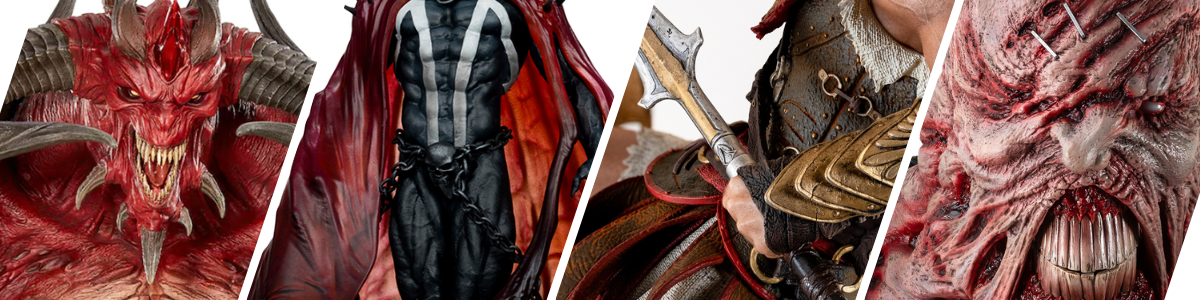
2. Polystone is a mixture of liquid plastic resin and powdered stone additives. It is significantly heavier than standard resin and feels much like porcelain. Manufacturers like Weta Workshop often use polystone for their Premium Format figures to give them a substantial, high-quality weight. While it is more durable against environmental wear than pure resin, it is very brittle. A drop or a hard bump will cause polystone to shatter or chip.

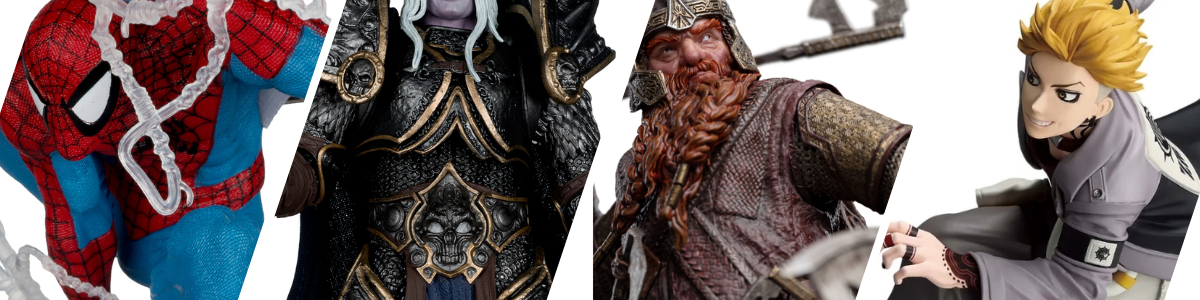
3. PVC (Polyvinyl Chloride) is a type of plastic widely used for highly detailed, flexible figures, such as those made by Blizzard, Bandai, McFarlane Toys or PureArts. It is less prone to shattering and generally easier to clean. However, PVC's main weakness is heat. Under high temperatures or direct sunlight, PVC can warp, bend, or "lean" over time, permanently altering the pose of your figure.
Polyresin vs. Polystone vs. PVC, Side by Side
Property | Polyresin | Polystone | PVC |
Weight | Light for its size | Heaviest (stone-filled) | Light |
Detail sharpness | Excellent | Excellent | Good, but softer edges |
Porosity/moisture absorption | Higher | Higher | Lowest |
Solvent sensitivity | High | High | High |
Heat / warping risk | Low | Low | High |
Impact/chip resistance | Lower (more brittle) | Slightly better than polyresin | Highest (flexes) |
Typical use | Premium, limited-run statues | Premium, limited-run statues | Standard mass-production figures |
The practical takeaway: polyresin and polystone are close cousins that share the same care rules, while PVC is the outlier and easier to keep clean day to day, but far less forgiving of heat and direct sun.
Cheat Sheet: What's Safe and What's Not, By Material
To avoid accidental damage, use this quick reference table before cleaning your collection.
Cleaning method | Polyresin | Polystone | PVC |
Soft dry brush/microfiber | ✅ Safe | ✅ Safe | ✅ Safe |
Dry compressed air (low pressure) | ✅ Safe | ✅ Safe | ✅ Safe |
Plain water, lightly dampened cloth | ⚠️ Spot-test first | ⚠️ Spot-test first | ✅ Generally safe |
Mild soap + water | ⚠️ Only on unpainted base/underside | ⚠️ Only on unpainted base/underside | ⚠️ Spot-test first |
Alcohol/acetone/solvents | ❌ Never | ❌ Never | ❌ Never |
Household wet wipes | ❌ Never | ❌ Never | ❌ Never |
Direct sunlight display | ❌ Never | ❌ Never | ❌ Never |
UV-filtering display case | ✅ Recommended | ✅ Recommended | ✅ Recommended |
Summarizing the above, dry cleaning is always safe, wet cleaning is situational and material-dependent, and anything with alcohol, acetone, or ammonia is off the table for every material — it strips paint and can craze polyresin permanently.
How to Properly Dust and Clean Collectible Statues
Routine maintenance prevents the need for deep, risky cleaning. We recommend a light dusting every two to three weeks.
Essential Cleaning Tools
Throw away your feather dusters; they can snag on delicate parts and snap them off. Your statue cleaning kit should include:
Soft Makeup Brushes: High-quality, ultra-soft cosmetic brushes (like powder or blush brushes) are perfect for dusting capes, faces, and textured bases.
Anti-Static Brushes: Camera lens brushes work wonders for detailed crevices without building up static electricity.
Microfiber Cloths: Use premium, lint-free microfiber for wiping down large, smooth surfaces like bases and nameplates.
Silicone Air Blower: A manual air blower (used for camera lenses) safely blasts dust out of deep textures without the freezing propellants found in canned air.
Do this pass every two to three weeks and you'll rarely need anything more aggressive.
Wet Cleaning: When and How to Do It
If a statue has been neglected and dust has become sticky, dry brushing won't be enough.
Prepare: Wash your hands to remove natural oils, or wear nitrile gloves.
Spot Clean: Never submerge a polyresin or polystone statue in water. Instead, take a cotton swab (Q-tip), dip it in lukewarm water, and squeeze out the excess so it is barely damp.
Gentle Motion: Gently roll the swab over the dirty area. Do not scrub.
Dry Immediately: Follow up instantly with a dry cotton swab or microfiber cloth to ensure no moisture is left behind to seep into the paint.
(Note: PVC figures can be washed more freely with lukewarm water and a drop of mild dish soap, but always dry them thoroughly).
Pay attention: Never let water pool in seams or joints.
Strictly Prohibited: What to Avoid
Alcohol, acetone, and any solvent-based cleaner will dull or strip paint on contact, sometimes within seconds. Household wet wipes are just as risky; many contain alcohol or mild detergents that aren't visible on the label but are strong enough to affect paint finishes. Skip anything marketed as an "all-purpose" cleaner; if a product isn't specifically made for painted collectibles or models, treat it as unsafe until proven otherwise.
Never use household cleaning chemicals. Rubbing alcohol and acetone will immediately strip the paint, melt the clear coat, and can even eat into PVC plastic. Wet wipes (baby wipes) are equally dangerous; they contain lotions, perfumes, and mild alcohols that leave a sticky residue or degrade the paint over time on your polyresin figures.
Protecting Statues from UV Light and Temperature Changes
Cleaning is only half the battle; where you place your statue dictates its lifespan.
Display Cases and UV-Filtering Glass
The best way to protect your figures from both dust and sunlight is an enclosed display case. Glass cabinets (like the popular IKEA Detolf or custom acrylic cases) drastically reduce dusting frequency.
To fight UV damage, consider upgrading your display. You can apply UV-filtering window film to the glass doors of your cabinets, or invest in museum-grade acrylic cases that naturally block 99% of UV rays. If your display room has windows, installing blackout curtains or UV window tints is mandatory.
Where Not to Display Your Statues
Near Windows: Even indirect sunlight causes fading. Above Radiators or Fireplaces: Heat causes PVC to warp and polyresin paint to crack. Near Air Conditioning Vents: Rapid temperature fluctuations cause materials to expand and contract, leading to micro-fractures in polystone. In Kitchens or Bathrooms: Airborne grease and high humidity will destroy high-end collectibles.
Storage and Moving
The Importance of Original Packaging
If you still have it, the original box and internal foam or plastic tray is genuinely the best storage and shipping solution available; it was engineered specifically for that figure's shape and weight distribution. Keep it in a dry area, and it's often worth holding onto even for pieces you display permanently.
So it would be better to never throw it away.
How to Pack Without the Original Box
If the original packaging is gone — no panic — follow these steps to pack it safely:
Disassemble: Remove all magnetic parts, interchangeable heads, hands, and weapons. Pack every piece individually.
Acid-Free Paper: Wrap the statue in acid-free tissue paper first. Do not put bubble wrap directly against the painted surface. The plastic bubbles can leave permanent circular imprints on the paint, especially in warm weather.
Bubble Wrap: Once wrapped in tissue paper, wrap the piece generously in bubble wrap.
The Box: Place the items in a sturdy cardboard box filled with packing peanuts. The statue should be suspended in the center, not touching the walls of the box.
Handling Your Figure: What to Hold and What to Avoid
More statues are broken during assembly and moving than by anything else.
Always hold the center of gravity. Lift statues by their thickest, most solid parts—usually the torso, the legs, or the base.
Never lift by extremities. Never pick a figure up by its head, arms, weapons, wings, or cape. These are often glued on or attached via weak pegs and will snap under the weight of the statue.
Two Hands Always: Support the base with one hand and stabilize the body with the other.
FAQ
Can I wash collectible figures with water?
For PVC figures, yes, you can wash them gently with lukewarm water. However, for Polyresin, pure Resin, and Polystone statues, you should never submerge them in water or wash them heavily. Water can seep into the porous material and permanently damage the paint. Use only a slightly damp cotton swab for spot cleaning these materials.
What is better for dusting statues: a brush or microfiber?
Both serve different purposes. A soft makeup brush is best for dusting delicate areas, deep crevices, and textured surfaces like clothing or hair without risking breakage. A microfiber cloth is better for wiping down large, smooth, flat surfaces like the statue's base.
How can I protect a figure from yellowing?
Yellowing is primarily caused by UV light and nicotine smoke. To prevent it, keep your statues away from direct and indirect sunlight, use UV-filtering glass or window films, and never smoke in your display room.
What should I do if a part of the figure breaks off?
Don't panic. If it is a clean break on polyresin or polystone, it can often be fixed. Use a tiny amount of high-quality, clear-drying cyanoacrylate (Super Glue) or two-part epoxy. Apply it with a toothpick never straight from the tube. If you are not confident, seek out professional statue restorers in collector communities.
How do I pack an expensive statue when moving?
The safest way is to use the original custom-fit styrofoam packaging. If you don't have it, disassemble all loose parts, wrap each piece in acid-free tissue paper (to protect the paint from chemical reactions), and then encase them heavily in bubble wrap before placing them in a secure box filled with packing peanuts.
Now that your collection is clean and secure, are you planning to expand it with international purchases? Don't miss the final part of our series, where we break down everything you need to know in our upcoming guide: Customs and Duties for EU & US Shipping.


- Profiti Ilias 4, KIBC business center, Germasogeia, 4046
 View on map
- Monday - Friday 10am - 7pm
- Saturday: 10am - 4pm
- (GMT+3)
- +35725260166
- [email protected]
© 2026 Fragstore.
