

Statue Scale Guide: 1/4 vs 1/6 vs 1/10 — How to Choose Your Scale
Statue Scale Guide: 1/4 vs 1/6 vs 1/10 — How to Choose Your Scale
Every scale ratio looks simple until you're staring at a checkout page, wondering whether "1/6" means a statue the size of a coffee mug or a toddler. Here's how to read a scale correctly and choose the one that fits your shelf, budget, and collection.
Scroll through any collectible statue catalog and you'll run into the same shorthand again and again: 1/4, 1/6, 1/10. For collectors buying their first statue or restarting a collection after years away can be more confusing than the price tag. Unlike a t-shirt or a keychain, a statue is a piece of furniture you're committing shelf space to, and there's no comfortable way to "exchange" a 65 cm statue for a smaller one once it's sitting on your shelf. This guide explains what statue scale actually means, compares the five scales you'll see most often, and walks through real examples from each one so your next purchase matches your shelf and your budget, not just the box art.
What "Scale" Means for a Collectible Statue and How It's Calculated
Scale on a statue box is a ratio, and it always describes the same relationship: the statue's height compared to the character's "real," in-universe height — the height that character is depicted at on screen, in the comics, or in the game. A statue marked 1/1 is full-size, built to match the character's actual height one-to-one. A 1/4 statue stands at one-quarter of that height. A 1/6 statue is one-sixth. A 1/10 statue is one-tenth.
The math is simple, but it hides one detail that catches a lot of first-time buyers off guard: the same ratio produces very different physical heights depending on how tall the character is to begin with. A 1/6 scale statue of an average-build adult human typically lands somewhere around 28–32 cm. A 1/6 scale statue of an armored giant, a dragon, or any oversized character can end up taller than some statues sold at 1/4 scale of a regular-sized hero. The number on the box tells you the ratio, not the size. For the actual size, always check the listed height in centimeters before you buy.
Statue Scale Comparison Chart (1/1, 1/4, 1/5, 1/6, 1/10)
Here's how the five most common statue scales compare for a roughly human-sized character. Treat these as a starting baseline rather than a guarantee as the examples below show, an unusually tall or oversized character will be noticeably bigger than these numbers at the same scale.
Scale | Typical height | Best for | Who it suits |
1/1 (life-size) | Full character height | Dedicated display rooms, statement pieces | Extreme collectors, retail/event displays |
1/4 | ≈ 45–50 cm | Centerpiece statues, premium lines | Collectors who want one piece to anchor a shelf |
1/5 | ≈ 35–40 cm | Large-presence pieces without 1/4 footprint | Collectors who want size without the 1/4 price tag |
1/6 | ≈ 28–32 cm | Balanced detail and shelf space | Most collectors — the default "sweet spot" scale |
1/10 | ≈ 17–20 cm | Compact collections, dioramas, duos | Limited space, new collectors, larger rosters |
That gap between "typical" and "actual" shows up constantly in real catalogs.
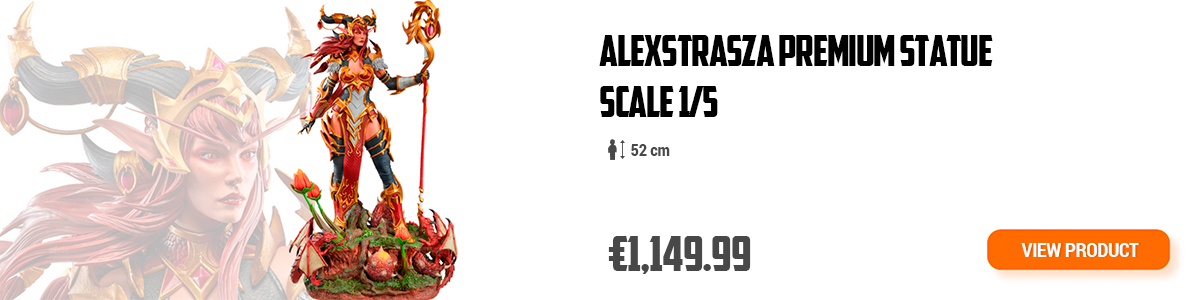
Blizzard's Alexstrasza Premium Statue is listed at 1/5 scale, but because Alexstrasza is depicted as a powerful, larger-than-human dragon queen, the finished piece stands 52 cm tall — noticeably taller than the 35–40 cm baseline a 1/5 statue of an average human would produce. It's a useful reminder to check height in centimeters alongside the scale ratio, especially for non-human or oversized characters.
1/4 — Built for Centerpiece Collections
1/4 scale is the format most premium statue lines use for their flagship, "I-built-my-shelf-around-this" pieces. At roughly 45–50 cm for a human-proportioned character, a 1/4 statue is large enough to read as a genuine display piece from across a room, with enough surface area for sculptors to add the kind of fine detail — fabric texture, individual strands of hair, elaborate bases — that tends to get lost at smaller scales.
Pros of 1/4 Scale
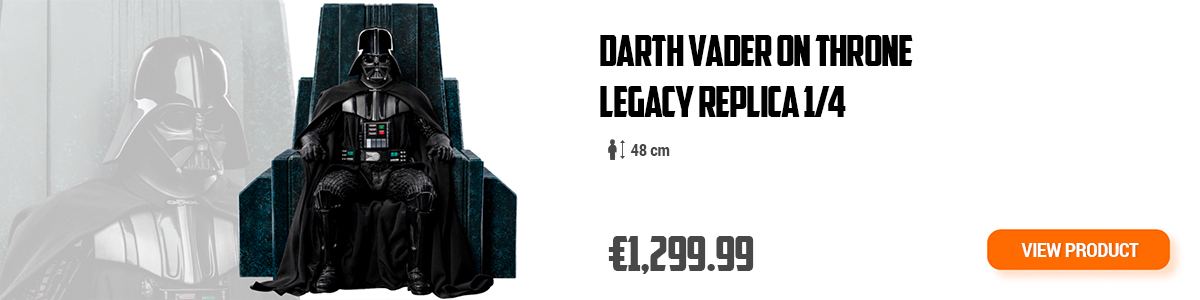
The size is the whole point: 1/4 statues are built to be the visual anchor of a shelf or cabinet, not one piece among many. The larger surface area also means more room for paint detail, interchangeable parts, and elaborate diorama bases, which is why most premium "Legacy Replica"-style lines from manufacturers like Iron Studios are produced at this scale.
What to Watch Out For (Weight, Space)
The tradeoff is exactly what you'd expect: weight, footprint, and price all scale up with size. A 1/4 statue typically needs a dedicated shelf or cabinet slot of its own rather than sitting alongside several other pieces, and shipping costs are noticeably higher due to size and weight. Before buying, measure the depth of your shelf, not just the height — wide diorama bases are common at this scale and can make a statue deeper than it looks in product photos.
1/6 — The Balance of Price and Detail
If 1/4 is the format for centerpieces, 1/6 is the format most collectors actually settle into for the bulk of their collection. At a baseline of roughly 28–32 cm for a human-sized character, 1/6 statues are large enough to show real sculpting detail while staying small enough to fit several pieces on a standard shelf — and pricing typically reflects that middle position too.
Pros of 1/6 Scale
1/6 is widely treated as the sweet-spot scale in the collectibles market: detailed enough to satisfy serious collectors, compact enough to display in numbers, and produced across a wide range of price points, from entry-level pieces to premium licensed statues.
Catalog Examples
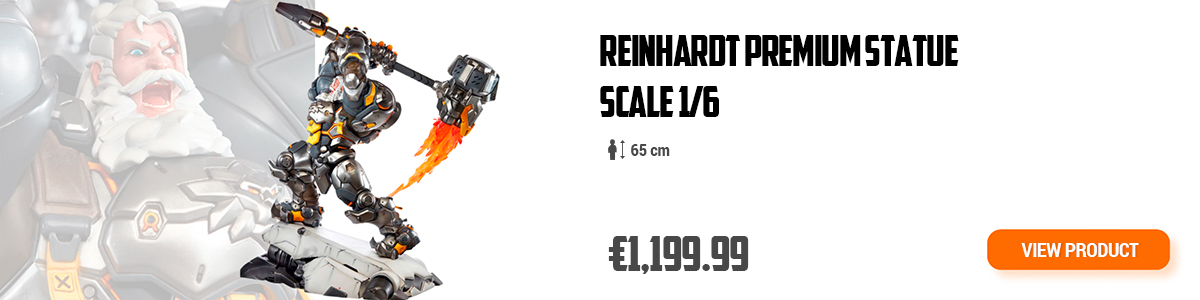
Not every 1/6 statue lands at that 28–32 cm baseline, though. Blizzard's Overwatch Reinhardt Premium Statue is built at 1/6 scale, but because Reinhardt is depicted as a heavily armored, larger-than-human tank hero, the finished statue stands 65 cm tall and is priced and produced more like a premium centerpiece than a typical 1/6 figure — a clear illustration of why checking a character's in-universe size matters as much as the scale ratio itself.
1/10 and Smaller — Built for Small Spaces and Dioramas
At roughly 17–20 cm for a human-sized character, 1/10 is the scale most collectors reach for when shelf space, budget, or both are limited. It's also the most common scale for statues depicting two characters together, since a duo at 1/10 still fits a normal shelf footprint where the same scene at 1/6 or 1/4 would not.
Pros of 1/10 Scale
The appeal is straightforward: lower price per piece, smaller footprint, and the ability to build out a wider roster of characters in the same amount of shelf space. 1/10 is also a common entry point for new collectors, since it lowers the cost of trying out a new manufacturer or franchise before committing to a larger scale.
Catalog Examples
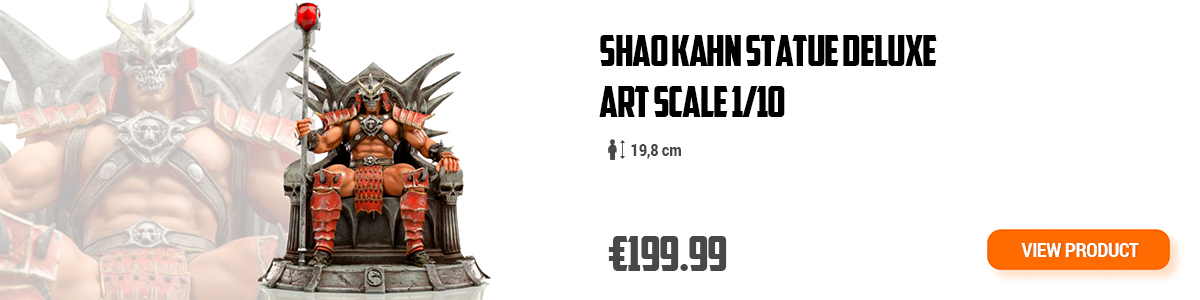
Iron Studios' Shao Kahn Deluxe Art Scale 1/10 statue is a good example of the format: a detailed diorama piece — the Mortal Kombat emperor seated on his skull-adorned, rock-carved throne — that packs in elaborate sculpting at 19.8 cm tall, for a price well below what the same level of detail would cost at 1/6 or 1/4 scale.
How to Choose Your Scale for Your Budget and Space
- Measure before you shop, not after. Check the depth, width, and height of the actual shelf or cabinet you plan to use — diorama bases at 1/4 and 1/5 scale are often deeper than they look in photos.
- Set a per-statue budget ceiling. Decide what you're comfortable spending on a single piece before browsing, since premium 1/4 and 1/5 statues can cost several times more than a 1/6 or 1/10 statue of the same character.
- Decide if you're building centerpieces or a roster. If you want one or two statues that dominate a shelf, lean toward 1/4 or 1/5. If you want to collect a full cast from a franchise, 1/6 or 1/10 will get you there in the same space and budget.
- Pick a default scale and stay flexible at the edges. Most collectors settle on one primary scale for consistency, then make occasional exceptions for a favorite character they want as a true 1/4 centerpiece.
FAQ
What is the most popular statue scale among collectors?
1/6 is generally considered the most popular scale across the collectibles market. It's large enough to show meaningful detail, compact enough that collectors can display several pieces together, and produced across a wide range of price points, which makes it accessible to both new and experienced collectors.
Can I mix different scales in the same collection?
Yes — many collectors do, especially when they group statues by display purpose rather than strict scale matching. A common approach is one or two 1/4 statues as standalone centerpieces, paired with a larger group of 1/6 or 1/10 statues displayed together as a "roster" shelf. Mixing scales mainly becomes a problem if you try to place very different scales side by side in the same scene, where the size mismatch is more visually obvious.
Which scale should I choose if I have limited storage or display space?
1/10 scale is the standard choice for limited space, since a human-sized character lands around 17–20 cm tall, letting you fit several statues on a single shelf. If you want one larger piece without committing a full cabinet to it, a 1/6 statue is usually the largest scale that still fits comfortably on a standard bookshelf.
What is the price difference between 1/4 and 1/6 scale statues?
1/4 statues are typically several times more expensive than the equivalent 1/6 statue of the same character, since they require significantly more material, more detailed sculpting work, and larger, more complex diorama bases. It's common to see a 1/4 Legacy Replica-style statue priced in the four-figure range while a 1/6 statue of a comparable character sits well under half that.
How tall is a 1/6 scale statue in centimeters?
For a roughly human-sized character, a 1/6 scale statue typically stands around 28–32 cm tall. That number changes significantly for oversized or non-human characters — a 1/6 statue of an armored giant or a dragon-sized character, for example, can stand well over 60 cm, since the statue's height always scales with the character's actual in-universe size.
Once you've settled on a scale, the easiest way to compare specific pieces side by side is to browse the full collectible statues catalog, where you can filter by scale, franchise, and price. And if you've already started building a collection, the next guide in this series covers how to clean, store, and protect collectible statues so detailed paintwork and delicate parts stay in showroom condition — useful no matter which scale you end up collecting: Collectible Figure Care: How to Clean, Store, and Protect Statues Made of Polyresin, Polystone & PVC.


- Profiti Ilias 4, KIBC business center, Germasogeia, 4046
 View on map
- Monday - Friday 10am - 7pm
- Saturday: 10am - 4pm
- (GMT+3)
- +35725260166
- [email protected]
© 2026 Fragstore.
